Start with the stable channel
Start with the stable build. Orca Slicer publishes releases for Windows, macOS and Linux, and the download listings split them into three tracks: a stable release, the previous release, and nightly builds. Stable is what most makers should run. Previous is the older stable release, kept alongside the current one so you can fall back without hunting through archives. Nightly is for testing changes before they reach stable.
Version numbers move, so treat any number below as a snapshot. At the time of writing, the listings showed Stable v2.4.2 dated 7 July 2026, with v2.4.1 from 28 June 2026 kept as the previous release. Before you download, check that the version in the listing matches the version in the file name you are about to run.
One thing to settle first: this site is an independent Orca Slicer resource, not the official project, and it does not host the installers. The tables here tell you what each build is for; the files themselves come from the project's own release channels. That is exactly why the verification checklist further down matters.
Match the build to your operating system
Every release covers three operating systems, but the file you need depends on the machine in front of you. This table maps the common choices.
Your system | Builds published | Choose this when |
|---|---|---|
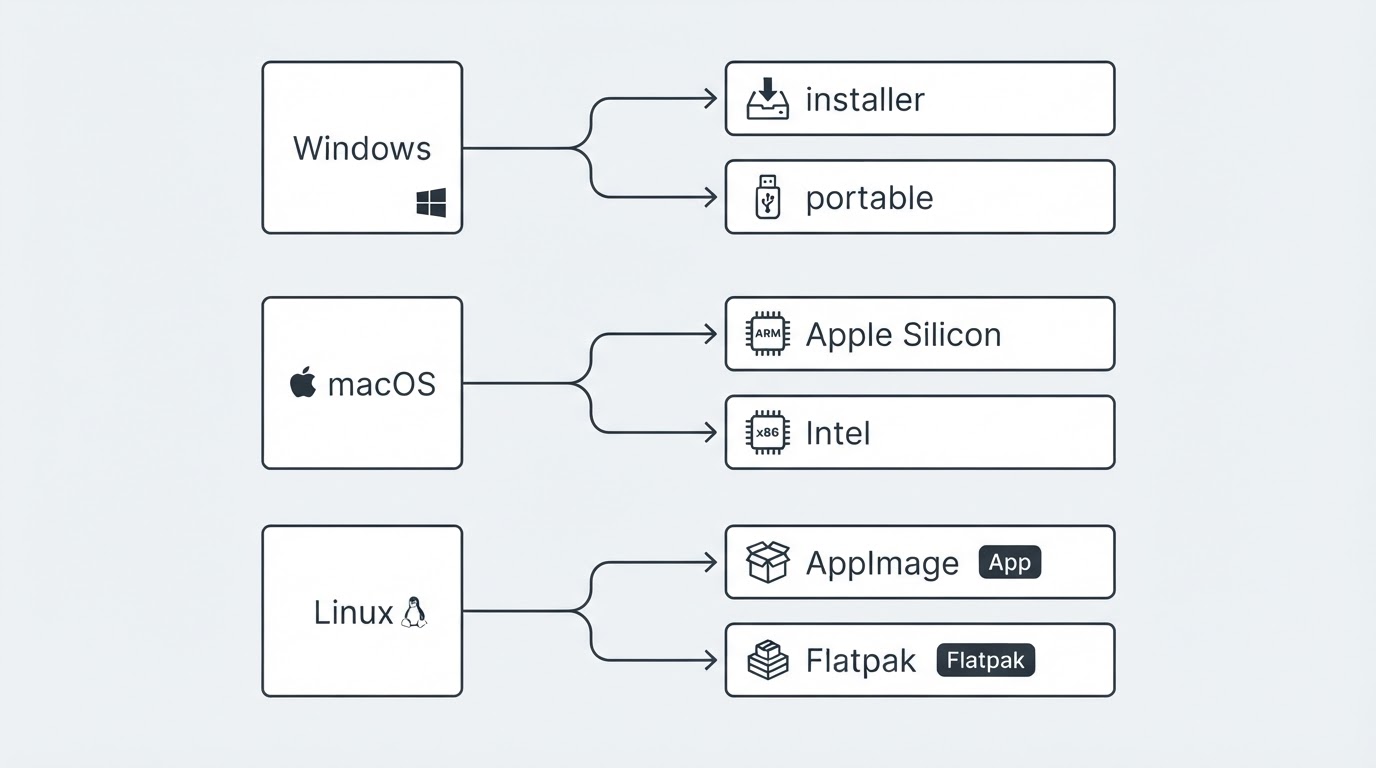
Windows | 64-bit installer, portable build, x64 and arm64 installers, Microsoft Store listing | Installer for a normal desktop; portable when you cannot install software |
macOS | Apple Silicon build, Intel build | Match the chip reported in About This Mac |
Linux | AppImage and Flatpak | AppImage to run a single file; Flatpak if you prefer a managed install |
The exact file list changes between releases, so read the columns on the download page rather than assuming the table above is current. The two things that rarely change are the architecture rule and the track rule: pick the build that matches your CPU, not the one with the newest number.
Windows: installer or portable?
The Windows column usually offers more than one way to run the same app. The 64-bit installer is the default for a normal desktop. The portable build is the one to take when you work on a locked-down machine where you cannot install software, or when you want to try a build without touching the system.
Architecture matters here more than on other platforms, because the column includes both x64 and arm64 files. Most desktops and gaming laptops are x64; ARM devices need the arm64 file. Grab the wrong one and the usual result is a file that will not start, which is a silly thing to debug when the label is right there.
Finally, check the version string before you run anything. A file named around an older version is a downgrade rather than a download, so confirm the number before you install it.
macOS: two architectures and the Gatekeeper prompt
macOS builds come in Apple Silicon and Intel variants. Check the chip in About This Mac and pick the matching file; the two are not interchangeable. If the page offers a single macOS download, read the file name before assuming it fits your machine.
The other macOS-specific step is the first launch. Gatekeeper may refuse to open an app downloaded from the internet. The documented workaround is System Settings → Privacy & Security → Open Anyway, which releases that specific app after you confirm it. The prompt is macOS checking a download it cannot verify, not a virus report, but it is also not a promise that the file is safe. Run the checklist below before you click Open Anyway.
Linux: AppImage or Flatpak
Linux users get two packaged options: AppImage and Flatpak. AppImage is a single file you make executable and run, which makes it easy to keep several versions side by side. Flatpak installs through the system's package tooling, which makes updates and cleanup more predictable.
Orca Slicer ships both formats, and the Linux install walkthrough covers both paths step by step. If you have been building the slicer from source just to get a current version, try the packaged route first; fewer moving parts means fewer ways for a good build to turn into a broken one.
Nightly builds, and the experimental belt-printer build
Nightly builds track work in progress. They are useful when you are testing a fix or a feature, and they are the wrong choice for a machine that has to finish a print job tonight. A nightly can change between two downloads, so a result you got last week is not guaranteed to reproduce today.
The nightly channel also carries an experimental _belt build for belt and conveyor printers, tested around infinite-Z slicing. Its tracking pull request had not been merged into the main branch at the time of writing, which is the clearest signal that this build is not ready for production. Treat it as a test-bench build: check it on a small part, keep your stable install untouched, and do not move paid work onto it until it reaches a stable release.
Verify the file before you install it
Downloads are the easiest place in a 3D-printing workflow to get burned, because the installer looks exactly like the real one. Run this checklist every time you grab a new version.
- Version and track match the listing. Stable, previous and nightly are different files with similar names. Confirm which track you actually want before you take the file.
- Architecture matches your machine. x64 versus arm64 on Windows, Apple Silicon versus Intel on macOS. One line in your system settings settles it.
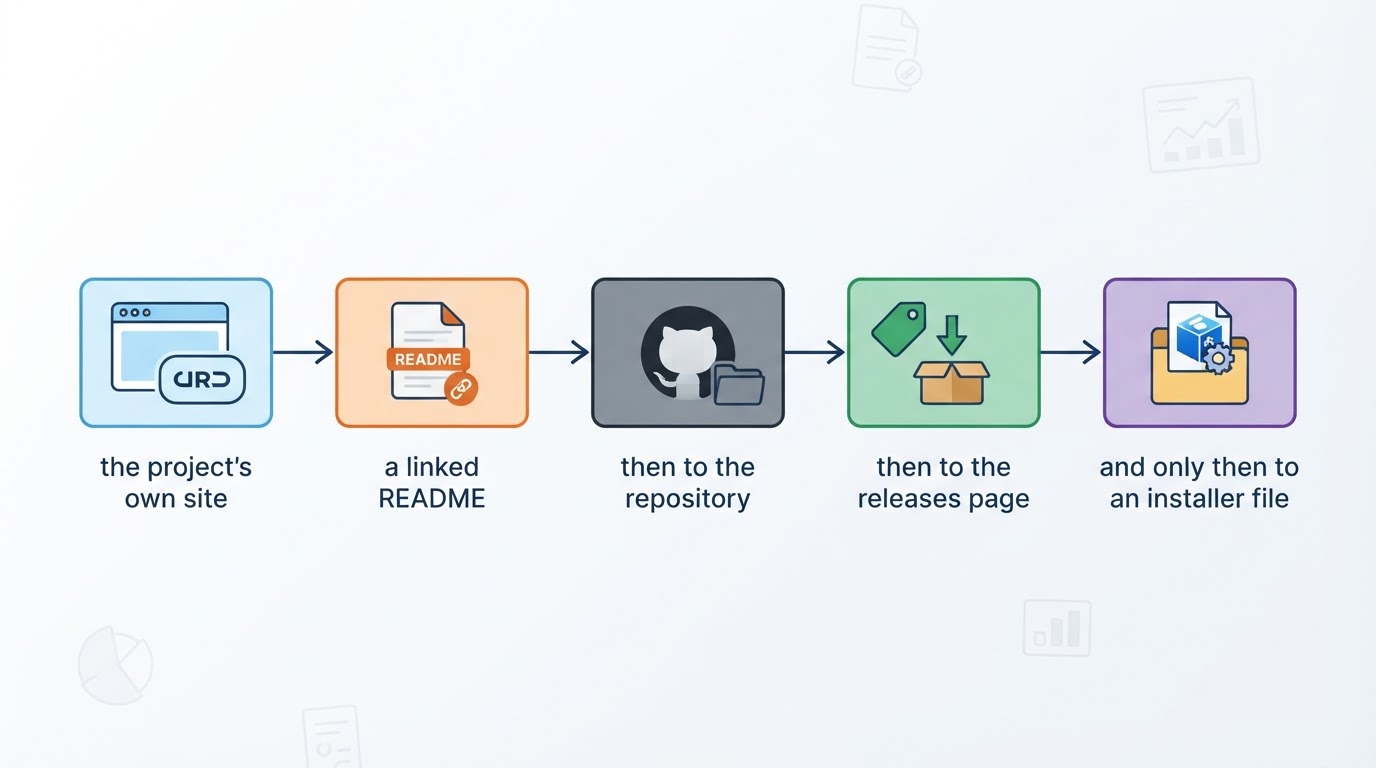
- The page is the project's release channel, not a mirror. If you arrived from a search result, a forum post or a video description, walk back to the project's own release pages before you download.
- Nothing about the page pressures you. Pages that offer a faster downloader, tell you to switch off your browser warnings, or hide the version number behind three buttons are not doing you a favour.
- You keep the file you verified. Hold on to the exact installer until your first few prints succeed. If a new version misbehaves, going back is a file you already have rather than a fresh hunt.
None of these steps needs special software, and together they take about two minutes. The point is not paranoia; it is that a verified file is a known quantity you can reproduce later.
After the install: profile, filament, calibration
The download is the easy half. Once the app opens, work through the setup in this order:
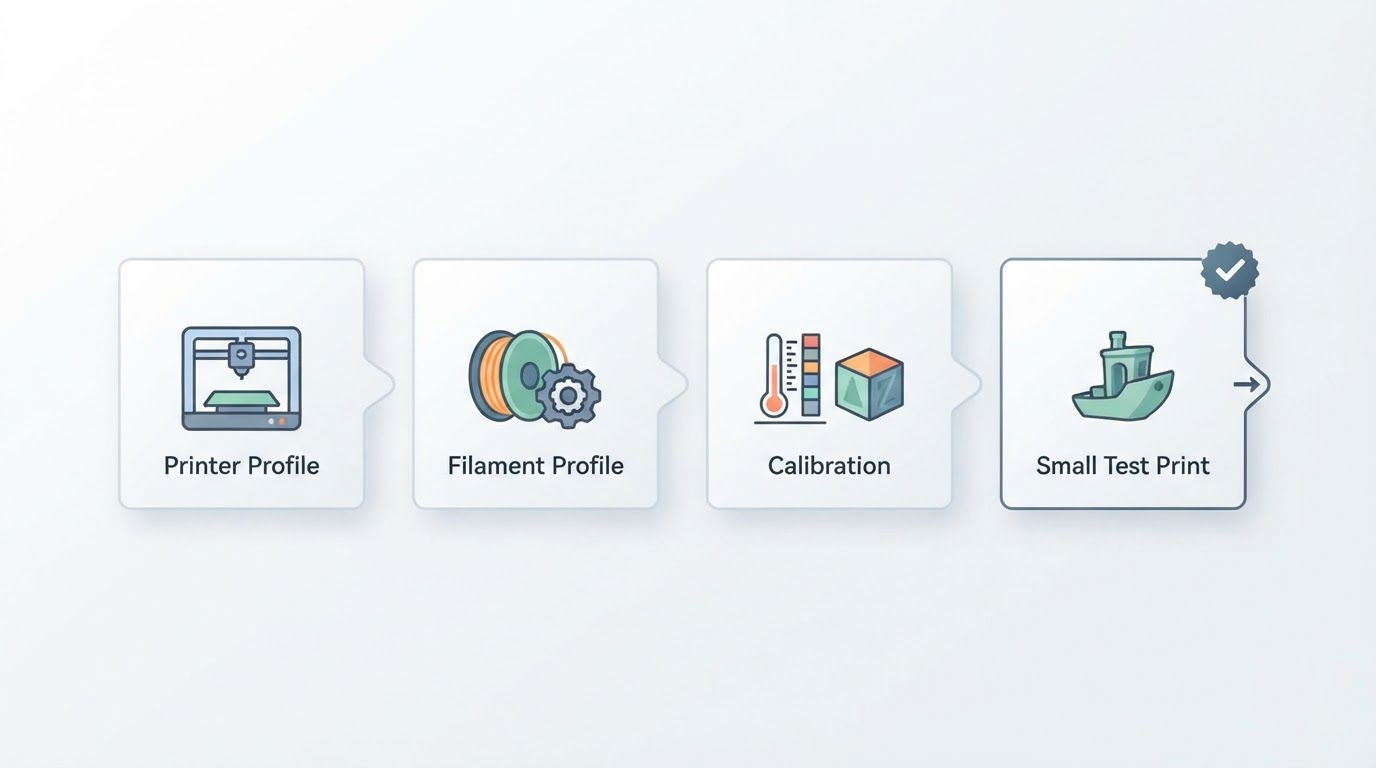
- Printer profile. Pick the profile that matches the machine in front of you, and settle the machine-level settings before you touch anything cosmetic.
- Filament profile. Select the material you actually loaded. A profile built for PLA will not behave like the PETG on your spool.
- Calibration. Run the calibration steps for that printer and material combination, then save the results so the next print starts from them.
- Test print. Finish with a small part you can inspect: first layer, walls, corners, top surface.
The step is complete when that test print comes off the plate cleanly and the profile you used is saved. If it does not, change one variable at a time. Swapping slicer versions, filament brands and temperatures at once turns a fixable profile problem into guesswork.
Common questions about the orca slicer download
Which version should I download?
Stable, unless you have a specific reason not to. Previous exists for the case where the newest stable breaks a workflow you depend on. Nightly is for testing, not for the printer that has to produce parts.
Do I need nightly to run a belt printer?
The experimental _belt build lives on the nightly channel, so testing it means nightly. For everyday printing on a belt machine, stable is still the sane default. The _belt work had not been merged into the main branch at the time of writing, which is the clearest signal that it is not ready for production.
Why does macOS say it cannot open the app?
Gatekeeper is blocking a download it cannot verify. The documented path is System Settings → Privacy & Security → Open Anyway. Confirm the file first, then allow it.
Should I keep the installer after setup?
Yes, at least until a few prints have succeeded. Keeping the exact version you validated makes a rollback a file you already own. After that, keeping the last known-good installer for your main machines is cheap insurance.
Can I judge a download by its file name alone?
No. File names are easy to copy. The name tells you the version and architecture you meant to get; only the release channel you came from and the version you confirmed tell you what you are about to run.
Bottom line
A clean orca slicer download is a short chain of decisions: the stable track, the architecture that matches your machine, the project's own release channel, and one pass through the checklist before you run the file. Do those four things and the install becomes uneventful, which is exactly what you want from a slicer. Then spend your attention on the printer profile, the filament profile and calibration, because that is where print quality is actually decided.